Indo Asian Times A Hindi Digital News Portal
-
Reluctance to Honour Letters of Credit
-
Lack of Pre-Shipment Finance Hurting Exports
-
Industry Raises Serious Concerns
By Hemant Kumar Tiwari | Bhubaneswar
Startups, Micro, Small and Medium Enterprises (MSMEs), and exporters in Odisha have expressed growing dissatisfaction with the functioning of the banking system. According to industry representatives, despite possessing internationally accepted Letters of Credit (LCs)—one of the safest payment security mechanisms in global trade—many banks are reluctant to extend essential pre-shipment finance (packing credit) to exporters.
As a result, many businesses in the state are unable to accept large export orders due to a shortage of working capital, leading to the loss of potential international contracts worth billions of rupees.
Letter of Credit: The Backbone of Global Trade
A Letter of Credit is widely regarded as one of the most secure payment instruments in international trade. Under this arrangement, the buyer’s bank guarantees payment to the exporter, providing financial security to manufacture, process, and ship the goods. Based on this assurance, banks are generally expected to provide packing credit or pre-shipment finance to exporters.
However, several exporters in Odisha allege that, in practice, obtaining such credit has become increasingly difficult.
Lack of Pre-Shipment Credit Affecting Production
Exporters say that once an overseas order is confirmed, substantial working capital is required for procuring raw materials, processing, packaging, quality testing, and logistics. Without timely access to pre-shipment finance, production schedules are disrupted, making it impossible to deliver goods within contractual deadlines.
An exporter stated that international buyers often cancel orders when delivery schedules are not met, resulting in significant losses not only for exporters but also for the country’s export earnings. The industry’s concern is that such delays also damage long-term business relationships and future opportunities.
Startups Hit the Hardest
New startups and MSMEs claim that banks frequently demand excessive collateral or prolong loan approval processes despite the existence of confirmed export orders backed by valid Letters of Credit. Industry members argue that even when payment is guaranteed by the buyer’s bank through an LC, procedural delays and the lack of understanding among banking officials often result in exporters losing valuable international business opportunities.
Entrepreneurs believe that timely banking support could significantly boost Odisha’s exports of agricultural products, spices, food products, herbal products, and other value-added goods.
Industry Calls for Effective Implementation of Export Finance Policies
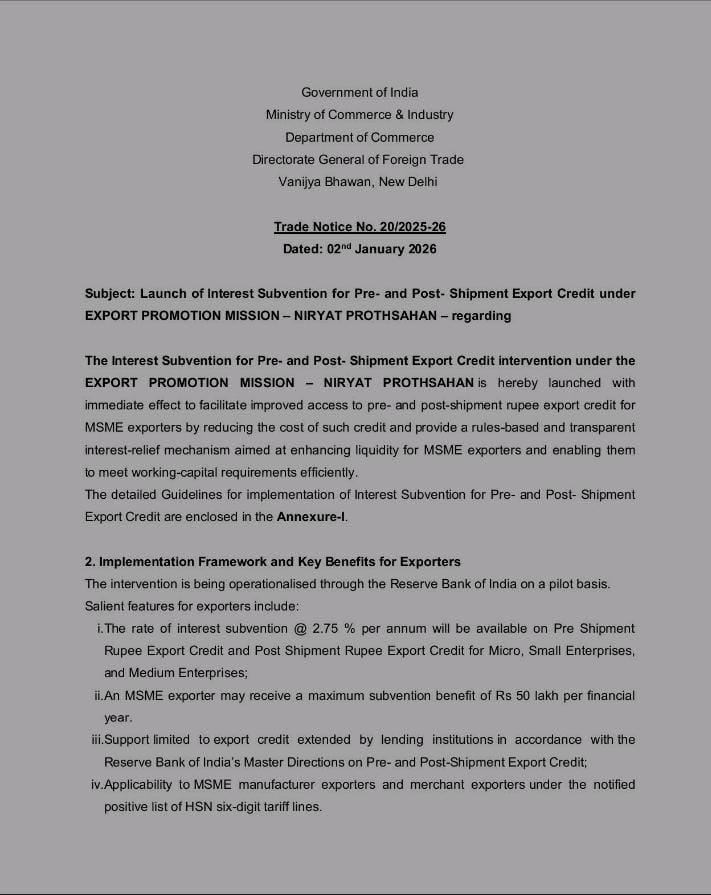
Industry bodies point out that India’s banking framework already provides for pre-shipment and post-shipment export finance. However, they allege that these provisions are not being implemented effectively in many cases, forcing exporters to face avoidable financial hurdles.
The industry has urged banks to ensure transparent and time-bound implementation of export finance policies.
Demand for Government and Banking Sector Intervention
Exporters have appealed to the Central Government, the Odisha Government, the Reserve Bank of India, and bank managements to intervene. They believe that if banks provide timely working capital in line with international trade practices, Odisha’s startups and MSMEs will be able to compete more effectively in global markets, boosting exports, investment, and employment.
Single-Window Pre-Shipment Credit Against Confirmed Letters of Credit
Exporters have proposed the introduction of a Single-Window Export Credit System for businesses holding valid international Letters of Credit. Under this mechanism, banks should sanction pre-shipment (packing credit) and working capital within a defined timeframe immediately after verifying the LC, eliminating the need for exporters to approach multiple departments and branches.
Such a system would ensure uninterrupted production, timely shipments, lower cancellation risks, stronger buyer confidence, and enhanced global competitiveness for Odisha’s startups and MSMEs.
Lack of Expertise in Banks’ Forex Departments
Exporters also allege that many bank foreign exchange (Forex) departments lack adequately trained and experienced personnel. According to them, several officials are unfamiliar with the operational aspects of Letters of Credit, their various types, payment mechanisms, and international documentation requirements. Consequently, exporters are often asked to repeatedly submit documents and clarifications, causing unnecessary delays in processing export transactions.
Industry representatives recommend that banks deploy specialised and well-trained officers in Forex departments and regularly update them on international banking regulations, trade finance, different types of Letters of Credit, and evolving global trade practices. They believe such reforms would significantly improve service quality and enable Odisha-based exporters to compete more effectively in international markets.
Expert Opinion
Financial experts believe that where exporters possess valid export orders, complete documentation, and Letters of Credit that comply with banking norms, financing applications should be evaluated promptly and fairly. They also recommend that if a financing request is rejected, banks should communicate the reasons in writing to ensure transparency and strengthen exporters’ confidence in the banking system.